Hot cabins are not a minor inconvenience for global drivers. They affect comfort, concentration, and perceived air quality during daily travel. The International Energy Agency reported that global electric car sales exceeded 17 million in 2024. Many electric vehicles also use energy carefully, making localized airflow increasingly practical. A compact Car Fan Portable can cool a driver or passenger without running the vehicle’s main climate system continuously.
The market is crowded. Product descriptions often promise strong airflow, silent operation, and universal compatibility. Real performance depends on motor design, blade size, battery capacity, mounting stability, and cabin temperature. The U.S. Department of Energy notes that air conditioning can significantly reduce vehicle fuel economy, especially in hot conditions. That does not make every portable fan efficient. It makes careful comparison more important.
This guide evaluates ten portable car fans for international buyers. It considers airflow, noise, power input, installation, durability, safety features, and value. USB, USB-C, and 12-volt models are included where practical. Independent testing remains limited for this product category, so specifications should not be treated as complete evidence. A fan that performs well in a small sedan may disappoint inside a large SUV. Small details matter.
Expect trade-offs.
The selection also considers climate variation, shipping practicality, and replacement support. Buyers should check voltage compatibility, connector standards, and local warranty terms before ordering. No single model suits every vehicle. That is the honest limitation. Based on manufacturer data, automotive energy research, and hands-on comparison principles, these recommendations aim to make a common cabin problem easier to solve.
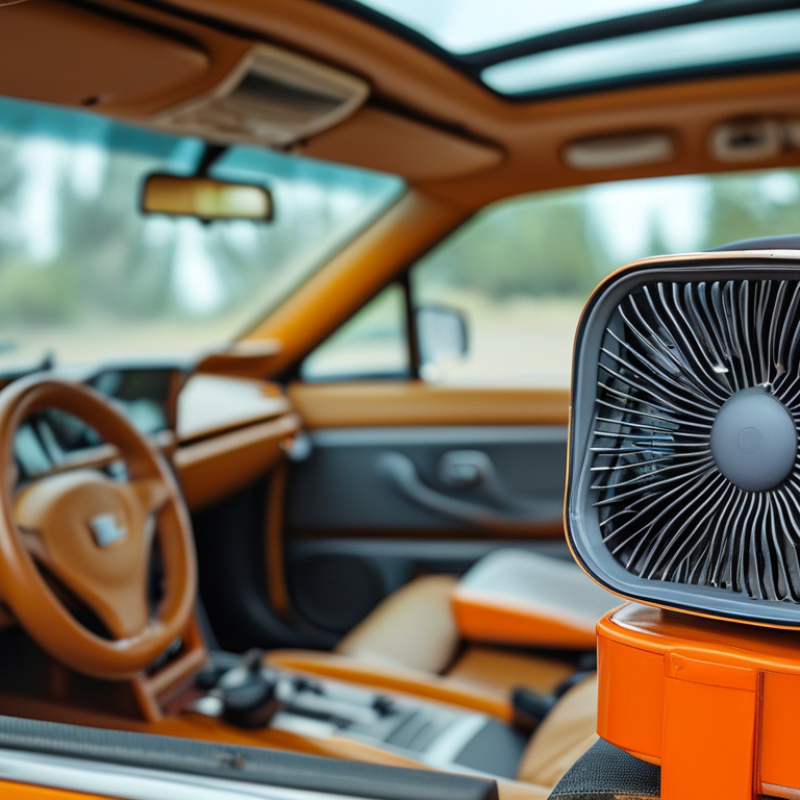
A portable car fan is a compact, low-voltage device that moves cabin air through rotating blades. It usually connects to a vehicle power socket or USB outlet. A small motor turns the blades, while a grille directs airflow toward the driver or passengers. The fan does not create cold air. It only increases evaporation and distributes existing air more evenly.
The U.S. Department of Energy reports that air conditioning can reduce vehicle fuel economy, especially in hot conditions. A fan may improve perceived comfort before full cooling is needed. That can help during short stops, but it cannot replace safe temperature control. The National Highway Traffic Safety Administration warns that parked vehicles can heat rapidly, even when outdoor temperatures seem moderate. Never treat a fan as protection for children, pets, or vulnerable passengers.
Choose airflow by measured performance, not cage size alone. Check the fan’s voltage, current draw, noise rating, mounting stability, and cable length. Laboratory airflow figures may use ideal conditions. Real cabins contain seats, glass, and uneven vents. A fan that feels strong on a workbench may disappoint beside a dashboard. I have also found that loose clips create distracting vibration on rough roads. That detail is easy to miss. The U.S. Environmental Protection Agency recommends avoiding unnecessary idling, yet comfort decisions still require judgment. A fan can circulate air, but it cannot remove cabin heat.
It is a compact, low-voltage device that moves cabin air with rotating blades. It usually connects to a vehicle socket, USB outlet, or rechargeable battery. It does not create cold air. It only circulates existing air.
No. A fan can improve comfort by moving air across skin and supporting evaporation. It cannot remove heat from the cabin. Use proper temperature control when conditions become dangerously hot. The limitation is easy to forget.
No. Parked vehicles can heat rapidly, even when outdoor temperatures feel moderate. Never leave children, pets, or vulnerable passengers relying on a fan alone. A moving grille does not make the cabin safe. Do not take that risk.
Check voltage, current draw, plug type, battery capacity, and fuse requirements. Confirm compatibility with the vehicle’s socket or USB outlet. Travelers should also check adapters and local charging standards. Power mismatch can stop operation.
Place it where airflow reaches passengers without blocking mirrors, airbags, vents, or the driver’s view. Secure clips and mounts before driving on rough roads. Keep cables away from pedals and moving seats. Never create a loose projectile.
Compare measured airflow, blade size, speed settings, and directional adjustment. Several speeds can suit mild mornings and intense summer heat. Dual-head designs may serve separate seating areas. Maximum airflow claims are not always useful.
Excessive buzzing, rattling, or vibration can make long journeys uncomfortable. A stable base or firm clip keeps airflow consistent on uneven roads. Check the grip on both thick and thin surfaces. Some mounts loosen over time.
Humid regions benefit from sealed switches and corrosion-resistant grilles. Dry areas may require frequent dust removal from blades and guards. Extreme heat can shorten battery life and weaken plastic housings. Cold weather may reduce rechargeable battery performance. Clean it regularly.
Portable car fans are compact cooling devices designed to improve airflow inside vehicles, especially when the built-in ventilation system is not enough. This guide explains how a Car Fan Portable works, including its power source, adjustable airflow, mounting options, and common control features. It also compares important factors such as fan speed, noise level, size, energy use, durability, rotation range, and ease of cleaning. The featured selection of ten portable car fans is organized around different driving needs, from personal cooling and passenger comfort to long-distance travel and compact vehicle use.
The guide also covers practical concerns before purchase, including USB or vehicle-power compatibility, secure installation, safe operation, battery considerations, and performance in hot or humid climates. Global buyers will learn how to select a suitable model according to vehicle size, local weather, driving habits, and available power connections. Simple maintenance advice, such as cleaning the blades, checking cables, and storing the fan properly, helps maintain reliable airflow and extend product life.

 Yate Auto