The best Tesla Accessories are not always the flashiest ones. In China, useful choices often solve everyday problems: a crowded trunk, dusty floor mats, bright screen glare, or a phone that needs a secure place. Tesla CEO Elon Musk has repeated a manufacturing principle that also offers a useful shopping test: “The best part is no part.” His remark was about simplifying products, not a recommendation for car accessories. Still, it reminds buyers to choose additions that serve a clear purpose.
This guide explores ten popular accessory categories, from fitted floor liners and cargo organizers to charging-cable storage and screen protectors. Small details matter. A mat should fit the exact model and year; a mount should not block the driver’s view. China’s weather, parking conditions, and charging setup can also shape what feels practical. No single list fits every owner. Some accessories look useful online but become clutter after a week. That happens. The aim here is to compare function, fit, material quality, and ease of installation—not to treat every add-on as essential. Check compatibility before buying, since Tesla models and interiors can differ. Properly chosen, a few well-matched accessories can make daily driving tidier and more comfortable.
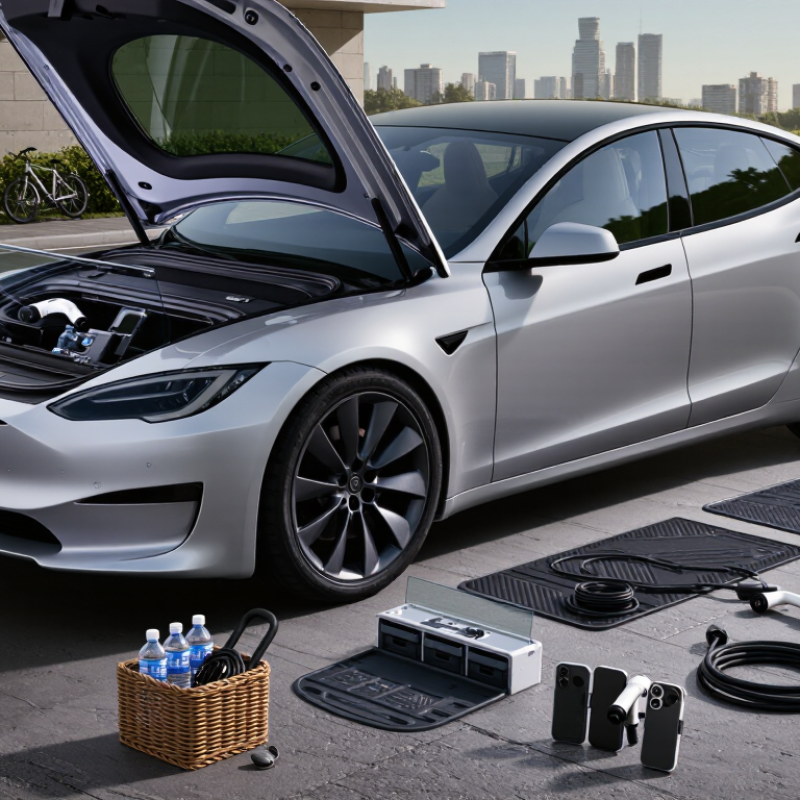
In China, a Tesla accessory is best understood as an add-on that supports daily use without being part of the car’s original equipment. Think of fitted floor mats catching rainwater, a boot liner protecting the cargo area, or a screen film reducing fingerprints. Small things matter.
The boundary is not always clear. A charging cable or storage organizer may be sold as an accessory, while a replacement component belongs more naturally to repair. I would also separate software features from physical add-ons. The label on a shop page alone proves little; check dimensions, material details, installation needs, and whether the item suits the exact vehicle version.
China’s market scale makes compatibility especially relevant. The China Association of Automobile Manufacturers reported 12.866 million new-energy vehicle sales in 2024, equal to 40.9% of new-vehicle sales. That figure describes vehicles, not accessory purchases, so it should not be treated as proof of demand for any particular product. Still, it helps explain why buyers compare fit and usability carefully. A mat that curls near the pedals is not a minor flaw. Nor is an organizer useful if it blocks a storage compartment. Real-world fit can disappoint, even when photos look convincing.
Common accessory categories and their practical-use scores
What counts as an accessory? A non-factory add-on used to protect, organize, charge, or maintain a vehicle. The 1–5 scores are an editorial guide to everyday usefulness, not sales figures, survey results, or a measured popularity ranking. Availability and compatibility can vary by vehicle model and year.
Choosing accessories for different electric-car models starts with fit, not appearance. A low sedan may need slim floor mats that do not curl near the pedals. A taller crossover benefits from a boot liner with raised edges for wet shoes or muddy bags. Check the model year, trim, and cabin layout before ordering. Small detail. Big difference.
For a compact cabin, choose storage that leaves cup holders and charging ports easy to reach. A center-console organizer can stop coins and cables from sliding around, but bulky inserts may make the space harder to use. Larger vehicles often need different solutions: seat-back protectors, cargo dividers, or roof storage. Measure the usable area rather than trusting a product photo. I would recheck this step; it is easy to overlook a few centimeters.
Daily routines matter, too. Drivers who park outdoors may value sunshades, while frequent passengers may prefer rear-seat organizers. Keep accessories clear of airbags, seat-belt paths, pedals, and driver controls. For electronic add-ons, verify power requirements and installation guidance before connecting anything. A neat accessory is not useful if it rattles, blocks visibility, or complicates cleaning. Fit can vary even between similar trims, so retain packaging until the item has been tested on a short drive.
| No. | Accessory | Typical China Price (CNY) | Best Fit by Model | What It Helps With | How to Choose |
|---|---|---|---|---|---|
| 1 | Custom-fit floor mats | ¥200–¥800 | Model 3 and Model Y; also available for Model S and Model X | Helps protect the cabin floor from rain, mud, dust, and everyday spills. | Match the exact model year and interior layout. Check that mats do not obstruct the pedals and are secured with the vehicle’s floor anchors. |
| 2 | Trunk and cargo-area liner | ¥150–¥600 | Model Y and Model X are useful for frequent cargo use; Model 3 and Model S also have model-specific options | Protects the cargo floor from groceries, luggage, sports equipment, and wet items. | Choose a liner shaped for the correct trunk configuration. For Model Y and Model X, check whether the design accommodates underfloor storage. |
| 3 | Windshield and roof sunshades | ¥80–¥350 | All models; roof-panel shapes vary by model and model year | Reduces direct sunlight entering the parked cabin and can improve comfort in hot weather. | Confirm the shade set is designed for the specific windshield and glass-roof layout. A close fit helps prevent gaps around the edges. |
| 4 | Center-screen protector | ¥30–¥150 | All models, but screen dimensions and orientation vary across generations | Helps guard the touchscreen against fingerprints and light scratches. | Check the screen’s size and orientation before ordering. Matte finishes can reduce reflections but may slightly change screen clarity. |
| 5 | Mud flaps | ¥50–¥200 | Most useful on Model 3 and Model Y; verify fitment for every model and year | Helps limit mud and small road debris thrown onto the lower body panels. | Look for a model-specific shape and secure mounting. Check that the flaps do not rub against the tires during steering or suspension movement. |
| 6 | Seat-back and rear-seat kick protectors | ¥60–¥250 | Model Y and Model X are practical choices for family use; also available for Model 3 and Model S | Helps keep seat backs cleaner when passengers ride in the rear. | Choose a size that does not interfere with seat adjustment, rear vents, or child-seat installation. Use only where it does not affect airbag areas. |
| 7 | Center-console organizer inserts | ¥30–¥180 | Model 3 and Model Y have many options; Model S and Model X consoles differ by generation | Separates small items such as cards, keys, and charging cables inside the console. | Match the insert to the console design and model year. Make sure it can be removed easily for cleaning and does not block ports or moving covers. |
| 8 | Door-sill and entry protectors | ¥40–¥200 | All models, with different sill shapes and door layouts | Helps protect painted or trim surfaces from shoe scuffs when entering and exiting. | Confirm the shape for the correct doors and model year. Choose smooth-edged pieces that do not interfere with door seals. |
| 9 | Portable tire inflator | ¥100–¥500 | Useful for all models as part of a basic roadside kit | Can help restore tire pressure when a tire is slightly low; it is not a substitute for professional puncture repair. | Check the inflator’s power method, pressure range, hose reach, and storage size. Follow the vehicle’s recommended tire pressure and stop if a tire is damaged. |
| 10 | Frunk or trunk storage organizer | ¥50–¥300 | Model 3, Model Y, Model S, and Model X have different compartment shapes | Keeps small items from shifting and makes use of available storage compartments. | Choose a compartment-specific size and leave space for any drainage openings, wiring, or removable panels. Avoid overloading the compartment. |
Prices are indicative ranges for non-branded aftermarket products in China and may vary by material, seller, and season. Always confirm fitment using the vehicle’s model year, refresh, and interior configuration before purchase.
For owners in China, useful accessories often solve small daily annoyances: hot cabins, wet shoes, and crowded parking spaces. A practical shortlist starts with fitted floor mats, a windshield sunshade, and a screen protector. Mats catch rainwater and grit; choose ones that sit flat and do not interfere with the pedals. A sunshade helps reduce direct heat on parked-car interiors. The screen protector can limit scratches, though glare or fingerprints may still bother some drivers.
A center-console organizer keeps charging cables and cards from sliding around, while a trunk organizer stops groceries shifting on sharp turns. That makes five. Add a portable tire inflator and a separate pressure gauge for routine checks; compare readings with the vehicle’s recommended figures, rather than guessing. Microfiber cloths are handy for dust and smudges, but rough fabric can leave marks. Small details matter.
Seat-back hooks can hold light shopping bags, and a compact vacuum helps clear crumbs from narrow seat gaps. Those complete the ten. In dense city traffic, simple storage often earns its space more than decorative add-ons. Check dimensions and vehicle compatibility before buying, since interior layouts can vary by model and year. One honest caveat: accessories do not all improve daily life. A bulky organizer may become clutter, and even a good sunshade needs careful folding and storage.
China’s 2024 vehicle market makes fit checks increasingly important. The China Association of Automobile Manufacturers reported 12.87 million new-energy vehicle sales that year. That represented about 40.9% of all new-vehicle sales. Similar-looking trims can still differ in roof rails, sensors, or console dimensions. Measure twice.
Check the model year, body style, drivetrain, and factory options against the accessory fitment chart. Then compare its mounting points with the vehicle. A camera cover should not shade a sensor; a floor mat must not catch the accelerator.
For lighting accessories, SAE J575 specifies tests for vibration, moisture, and dust. A fit claim alone is not test evidence. Ask for test results tied to the exact part number, not generic laboratory photos.
Inspect edges, wiring, materials, and stated load limits. Keep accessories clear of airbags, seat-belt paths, cameras, and emergency exits. Glossy photos can still hide loose clips. I may be overly fussy, but checking them by hand can prevent rattles, glare, or a loose item during hard braking.
China’s accessory market is broad, but buying channel matters. CAAM reported 12.866 million new-energy vehicle sales in China in 2024, showing the scale of the local EV market. For floor mats, trunk organizers, sunshades, screen protectors, and charging-cable holders, compare specialist EV-accessory shops with established domestic online marketplaces. Factory-direct suppliers may suit bulk orders, but product photos alone prove little.
Ask sellers to confirm compatibility by vehicle year, trim, and interior configuration. Request close-up photos, material details, warranty terms, and return conditions before paying. For electrical accessories, check applicable safety documentation and installation requirements. A low price can hide thin materials or poor fit. A small mismatch can be annoying every day.
Tips: Search using your exact model year and trim. Read recent reviews with real installation photos. For larger purchases, request a sample first; it costs more upfront, but may prevent a costly mistake.
Confirm the vehicle year, trim, body style, drivetrain, and cabin layout. Similar trims may differ by a few centimeters. Measure twice.
Yes. A floor mat should lie flat and stay clear of the pedals. Raised-edge cargo liners can contain wet shoes and muddy bags. Small detail. Big difference.
Pick organizers that leave cup holders and charging ports easy to reach. Bulky inserts can make a small console awkward. I would recheck the clearance.
Seat-back protectors, cargo dividers, or roof storage may suit your needs. Measure usable space instead of trusting product photos. Photos can mislead.
Keep it clear of airbags, seat belts, pedals, cameras, controls, and emergency exits. Make sure floor mats cannot catch the accelerator.
Verify its power requirements and installation instructions. Check applicable safety documents, too. Neat wiring matters.
Inspect the edges, clips, wiring, materials, and stated load limits. For lighting accessories, request test results for the exact part number.
Compare specialist electric-vehicle accessory shops with established domestic marketplaces. Ask for fit confirmation, close-up photos, warranty terms, and return conditions.
Search using the exact vehicle year and trim. Read recent reviews with installation photos. Request a sample for larger purchases. It costs more upfront, but may prevent regret.
Tesla Accessories in China can include practical additions that improve comfort, organization, protection, and everyday convenience, from cabin mats and storage organizers to sunshades and charging-related equipment. The right choices depend on the vehicle model, year, trim, and intended use, since dimensions, interior layouts, and equipment can vary. A useful top-ten selection should balance daily value and ease of installation, helping owners prioritize items that address their own needs rather than adding accessories simply for appearance.
Before buying, check product dimensions, model compatibility, materials, installation requirements, and clear safety information. Choose well-made items that do not obstruct visibility, controls, airbags, or normal vehicle operation, and follow the vehicle’s instructions when installing or using them. In China, accessories may be available through online marketplaces, automotive accessory shops, and specialist sellers. Compare specifications, return terms, and customer feedback, and confirm fitment directly with the seller so the accessory suits your vehicle and expectations.

Yate Auto