A Car Cup Holder seems simple until a bottle tips over on a sharp turn or a wide travel mug blocks the gear selector. Small details matter: opening width, mounting stability, reach, and clearance around controls. The right choice depends on the vehicle and the drinks you carry, not just a product’s star rating.
Automotive accessories reviewer Jordan Ellis puts the guiding idea this way: “A good cup holder keeps a drink steady without getting in the driver’s way.” That is the standard behind this list of ten options. We compare designs for compact cars, trucks, SUVs, and vehicles with limited console space. We also consider how holders fit different cup sizes, attach to the cabin, and handle everyday bumps. No single model suits every dashboard. Not quite.
A holder that works beside a truck’s deep console may crowd a small sedan’s controls. Some products add useful storage, while others wobble when loaded with a full bottle. Those trade-offs deserve a close look. This guide focuses on practical fit and everyday usability, while recognizing that vehicle layouts and drink containers vary. Before choosing, check the holder’s measurements against your car’s available space. A quick fit check can prevent an annoying surprise.
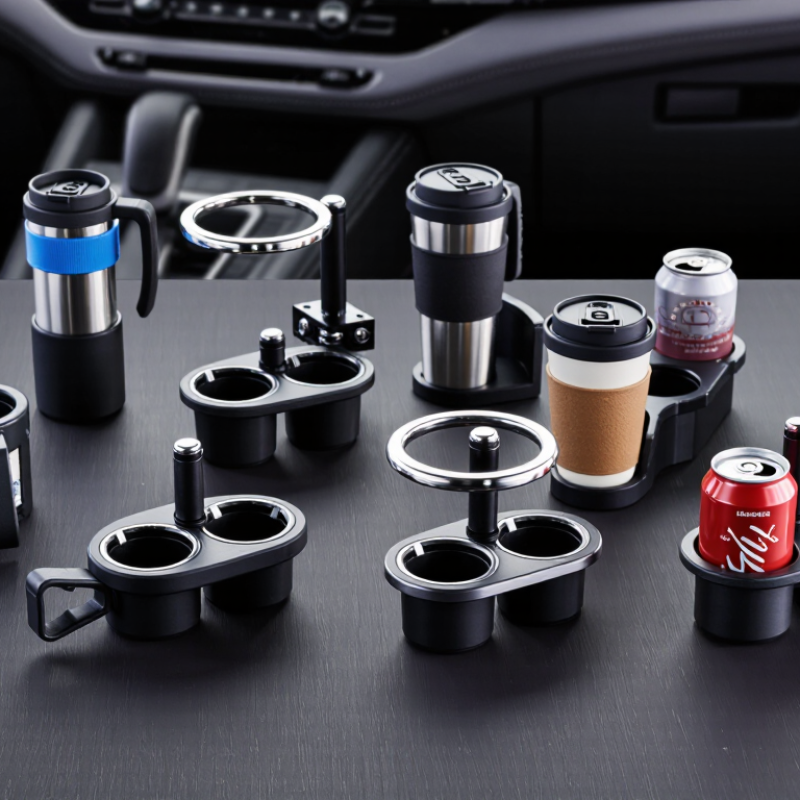
10 Best Car Cup Holders for Every Vehicle?
How Car Cup Holders Differ by Design and Mounting Style
Car cup holders vary in shape, depth, and placement. A console insert usually sits low and feels stable, but it may not fit around oversized bottles. An adjustable holder can grip different cup widths. Check its base and arms for sturdy materials that resist wobbling on rough roads. Small details matter. A tall travel mug can also block nearby controls, even when it fits the opening.
Mounting style affects convenience as much as design. Vent-mounted holders keep drinks within reach, but a heavy bottle may strain the vent slats. Door-mounted models save console space, though the door pocket must be deep enough to support the holder. Seat-gap designs can suit vehicles with limited console room. Still, they may shift when passengers enter or exit. Fit depends on the vehicle’s layout, so “universal” does not always mean effortless.
Tips: Measure the opening and nearby clearance before buying. Test with your usual drink container, not just a small paper cup. Check that the holder stays secure during turns and does not obstruct buttons, shifters, or vents. A neat-looking fit can still feel awkward after a week of driving.
Cup holders vary by design and mounting style. These approximate base diameters show why adjustable holders can fit a wider range of everyday drinkware; actual dimensions vary by product.
Fixed console holders suit containers close to their molded size. Adjustable inserts can accommodate more diameters, while vent-, clip-, and seat-mounted holders add placement options but should be checked for fit and stability.
A useful car cup holder should fit the vehicle and the drinks you actually carry. Fit comes first. Check the opening, mounting point, and nearby controls before buying. A console-mounted holder may feel stable, while a seat-gap or vent-mounted design can suit tighter spaces. However, make sure it does not block a gear selector, air vent, or seat belt. A holder that fits one car may wobble in another.
Compare the cup diameter and depth with your usual bottles, travel mugs, or takeaway cups. Adjustable grips can steady different sizes, but stiff arms may make removal awkward. Small details matter. Look for a weighted base or secure attachment, especially if roads are uneven. Materials should resist spills and be easy to wipe clean; textured surfaces can help, though they may collect crumbs. More capacity is not always better if extra compartments crowd the console.
Consider how installation and cleaning will work day to day. Removable inserts are handy after a coffee spill, but they should return firmly without rattling. Check whether the holder can be removed without tools and whether its parts fit your vehicle’s layout. It is easy to focus on features and overlook reach: test whether you can pick up a drink without leaning or taking your eyes off the road for long. The perfect fit is not always obvious from a product photo, so measure your space and compare it with the listed dimensions.
Compare these common cup-holder styles by mounting method, typical fit, capacity, and everyday trade-offs. Vehicle interiors and drink-container dimensions vary, so check measurements and mounting clearance before buying.
| Cup Holder Type | Mounting Method | Typical Fit or Capacity | Key Features to Compare | Main Advantage | Potential Drawback | Best Suited For |
|---|---|---|---|---|---|---|
| Adjustable cup-holder insert | Fits inside an existing vehicle cup holder | Usually accommodates one drink; adjustable grips can suit a range of cup widths | Insert diameter, grip range, base depth, and whether the adjustment mechanism is easy to clean | Uses an existing mounting point and can reduce movement of smaller cups | May not fit unusually shallow, narrow, or unusually shaped factory cup holders | Drivers whose drinks rattle or sit loosely in the original holder |
| Expanding cup-holder adapter | Expands inside a factory cup holder with a twist or adjustment mechanism | Typically holds one larger cup or bottle; fit depends on the vehicle’s original holder | Expansion range, locking strength, adapter height, and clearance around nearby controls | Can provide a more secure base without adhesive or dashboard hardware | Can occupy a second holder area or interfere with the center console in some vehicles | Vehicles with an available factory holder and a need for a larger drink opening |
| Weighted freestanding holder | Rests on a flat surface, often with a weighted or non-slip base | Usually holds one drink; some designs include a second opening | Base footprint, weight, grip material, holder depth, and stability during turns | Simple to place and reposition without attaching hardware to the vehicle | Needs a flat, clear surface and may slide if the base is not suited to that surface | Vehicles with a suitable console shelf or flat passenger-area surface |
| Vent-mounted holder | Clips or hooks onto an air vent | Usually holds one lightweight drink; check the stated load limit | Clip compatibility, vent-slat strength, airflow blockage, and drink-weight support | Places a drink within reach without using a console cup holder | Heavy containers can strain vent slats; the holder may obstruct airflow | Drivers with sturdy, compatible vents and limited console space |
| Dashboard adhesive-mounted holder | Attaches to a suitable dashboard surface with an adhesive base | Usually holds one drink; placement and surface area determine usable size | Base dimensions, surface compatibility, temperature resistance, and required curing time | Allows placement where a factory holder is not conveniently located | Adhesive may not bond well to textured, curved, dusty, or heat-sensitive surfaces | Vehicles with a suitable flat dashboard area and no convenient nearby holder |
| Windshield suction-mounted holder | Attaches to the windshield with a suction cup and adjustable arm | Usually holds one drink; arm reach and cup weight affect stability | Suction-cup diameter, arm length, locking mechanism, and visibility clearance | Offers adjustable placement when other mounting locations are limited | Must not obstruct the driver’s view; suction can loosen with dirt or temperature changes | Drivers who can position it safely outside the required field of view |
| Seat-gap cup-holder organizer | Wedges between a front seat and the center console | Often includes one or more drink openings plus small storage compartments | Gap width, seat movement clearance, organizer height, and bottle-opening diameter | Adds storage and can keep small items close to the driver | May restrict seat adjustment or fail to sit securely in vehicles with narrow or irregular gaps | Vehicles with an accessible seat-console gap and limited small-item storage |
| Door-panel cup holder | Uses an existing door pocket or attaches to a compatible door-panel area | Capacity varies; many designs hold one drink, depending on door-pocket dimensions | Door-pocket width, window and handle clearance, attachment method, and spill containment | Keeps the center console free for other items | Placement may be less convenient, and a drink can shift when the door is opened or closed | Vehicles with a deep, stable door pocket or a compatible mounting area |
| Console-side clamp holder | Clamps onto a console edge, seat rail, or other compatible support | Usually holds one drink; clamp range determines where it can be installed | Clamp opening, padding, load capacity, mounting stability, and clearance from moving parts | Can add a holder without occupying an existing cup-holder opening | Requires a suitable edge and may interfere with nearby trim, cables, or seat movement | Vehicles with a sturdy, accessible edge and unused space beside the console |
| Cup-holder phone-and-drink mount | Anchors in a factory cup holder and adds a phone cradle or adjustable arm | Uses one vehicle cup-holder opening; the upper section typically supports a phone and a drink below | Base stability, arm length, phone-width range, screen visibility, and access to charging ports | Combines two functions in one installation point | Can raise the phone into an awkward viewing position or make the drink harder to reach | Drivers who want an integrated phone location and have a spare factory holder |
Fit note: Measure the vehicle’s mounting location and the widest part of the cup or bottle, including handles. Keep any holder clear of airbags, controls, seat movement, and the driver’s field of view.
A cup holder should fit the cabin, not just the drink. In a compact car, a slim insert or console-mounted holder can preserve elbow room and leave nearby controls clear. A tall, adjustable holder may suit a pickup with a broad center console, while a door-pocket insert can work in a van with open side storage.
Measure the opening first. Check its depth, shape, and distance from the gear selector. Small details matter. A container that wobbles on a rough road can spill, even when the holder looks sturdy in a parked vehicle.
For narrow or irregular spaces, flexible inserts can help, but they may shift if the fit is loose. Clip-on designs add capacity, though they can crowd door handles or knees. Keep any holder clear of steering, controls, and sightlines.
NHTSA reported 3,275 deaths in distraction-affected crashes in 2023; that figure does not isolate cup holders, but it reinforces the value of avoiding awkward reaches. The AAA Foundation’s 2017 evaluation of 30 vehicles found navigation tasks took an average of 40 seconds to complete. It did not test cup holders, yet it shows how cabin tasks can demand attention.
Sit in the vehicle and test the reach. I would also check fit with the actual mug, since advertised dimensions can miss a tapered base. That part is easy to overlook.
Comparing ten car cup holders means looking beyond the number of drinks they can hold. Fit depends on the opening’s diameter, depth, and shape, plus the space around the console. A wide tumbler may fit at the top but wedge halfway down. Check whether the holder blocks nearby controls or crowds a passenger’s knee. Small details matter.
Capacity should include more than a standard paper cup. Test a narrow can, a tapered travel mug, and a tall water bottle; note whether each sits low enough to clear the dashboard. Stability is harder to judge from dimensions alone. A snug base, grippy lining, and low center of gravity can help limit rattling and tipping during turns. Still, a holder that grips tightly may make a full bottle awkward to remove. That trade-off is easy to miss.
For a fair comparison, record each holder’s fit, usable capacity, and movement on the same route, including a stop and a gentle turn. NHTSA reported 3,308 deaths in distraction-affected crashes in 2022; its data do not isolate cup-holder use. They do support keeping drink retrieval simple and within easy reach. These checks are practical, not laboratory tests, and vehicle layouts vary. A result that works in one console may disappoint in another.
Installing an aftermarket car cup holder starts with a safe, stable location. Park on level ground and check the vehicle manual before attaching anything. Choose a mount that fits the console, door, or seat gap without blocking the shifter, controls, vents, airbags, or your view. Tighten adjustable arms by hand; excessive force can crack trim. Test the holder with an empty cup, then a filled one. A small wobble matters on rough roads.
Keep it clean. Remove the holder periodically and wipe away sticky spills before they harden around joints or fasteners. Check suction pads, clips, and screws for looseness, especially after hot weather. NHTSA’s 2013 Visual-Manual Driver Distraction Guidelines recommend keeping individual glances away from the road to two seconds or less, with no more than 12 seconds total for a task. The guidance concerns in-vehicle tasks, not cup holders specifically, but it’s a useful reminder: placement should make drinks easy to reach without searching.
Measure the opening, its depth, and the space beside the shifter. Try your usual mug, especially if its base is tapered. A paper cup may not reveal a poor fit.
They can grip cups of different widths. Check that the base and arms feel sturdy, since loose parts may wobble on rough roads. Bigger is not always better.
A slim console insert may preserve elbow room. A seat-gap holder can add space, but it may shift as passengers get in or out. Check the reach first.
Yes. A tall mug may cover nearby buttons, and a mounted holder can crowd handles or knees. Sit in the car and check your view and reach. It is easy to miss.
They keep drinks close, but heavy bottles can strain vent slats. A lighter cup may be a better match. Not every vent is sturdy.
Test it while parked with an empty cup, then with a filled one. Look for rattling or movement. A neat fit can still feel awkward.
Read the vehicle manual and choose a location clear of controls, vents, airbags, and sightlines. Tighten adjustable arms by hand; too much force can crack trim.
Remove it now and then, and wipe sticky spills from joints and fasteners. Check clips, screws, and suction pads for looseness, especially after hot weather. I might still overlook a small rattle.
Choosing the right Car Cup Holder can make every drive more comfortable and organized. Cup holders vary in design and mounting style, from inserts that fit existing console spaces to adjustable attachments for dashboards, vents, or other convenient locations. Before choosing one, consider its dimensions, cup capacity, grip, adjustability, and ability to stay steady on uneven roads. The shape and layout of your vehicle’s interior also matter, since available space and access differ from one cabin to another.
This guide compares ten types of car cup holders by fit, capacity, and stability to help match each option to different vehicles and everyday needs. It also covers practical installation and basic maintenance, including checking that the holder is securely attached, cleaning spills promptly, and avoiding placements that interfere with controls or visibility. With the right fit and a little care, an aftermarket holder can provide a useful, convenient place for drinks.

Yate Auto